
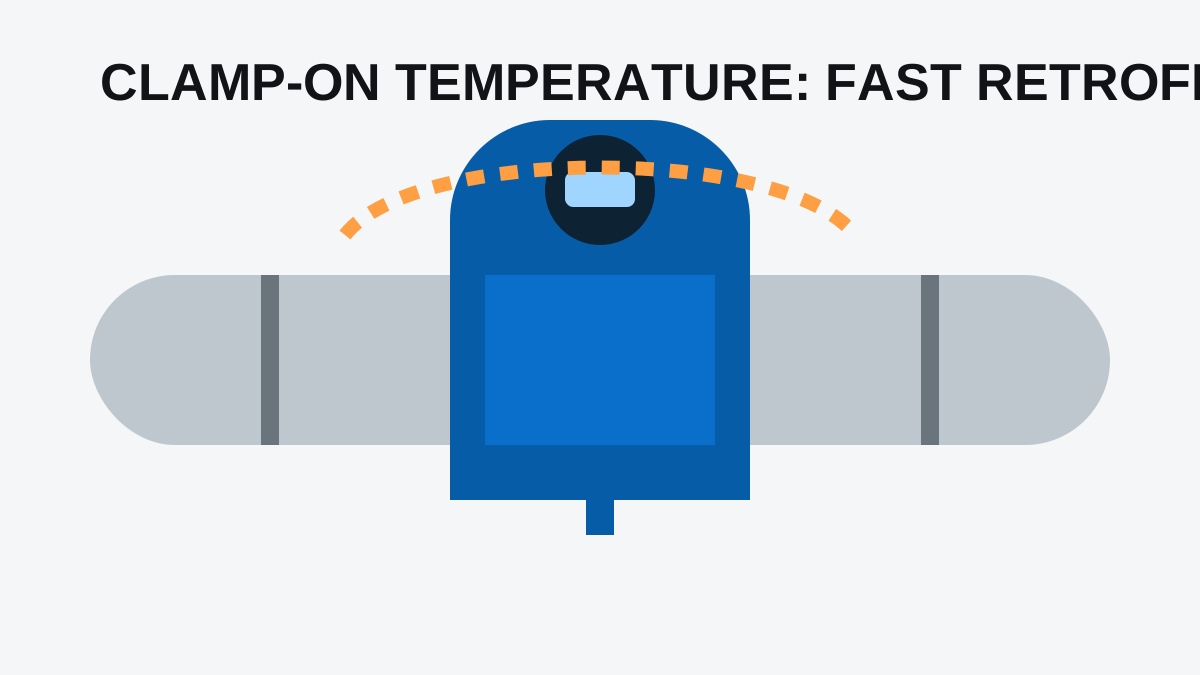
Clamp-on temperature instruments can be extremely useful, especially when a process connection is unavailable, shutdown is difficult, contamination must be avoided, or a quick retrofit is needed. But “clamp-on” covers several different technologies, and their ability to represent fluid temperature depends on the installation and compensation method.
What a basic surface sensor measures
A conventional clamp thermocouple or RTD measures the outside pipe surface. The fluid temperature must pass through the fluid film, pipe wall, contact interface, and sensor body. Ambient air and insulation also influence the reading. This usually creates more lag and uncertainty than a correctly installed immersion sensor.
How advanced clamp-on systems improve the estimate
Some modern systems use multiple sensing points, known pipe properties, ambient measurement, insulation, and thermal models to estimate internal fluid temperature. These can perform much better than a simple surface probe when installed within their validated application limits.
Where clamp-on measurement is attractive
- Retrofits without cutting or welding the pipe
- Hygienic or high-purity services
- Temporary measurements and diagnostics
- Processes where thermowell failure risk is undesirable
- Small lines where insertion is difficult
- Projects with limited shutdown windows
What can reduce accuracy
- Low or intermittent flow
- Changing ambient temperature or wind
- Thick, lined, coated, or poorly characterized pipe
- Bad sensor contact or inconsistent clamping force
- Scale, corrosion, or insulation gaps
- Rapid process transients
- Installation near heat sources, supports, or phase changes
How to make the installation credible
Follow the manufacturer’s pipe-material and diameter limits, prepare the surface, use the specified thermal interface material, install insulation exactly as required, and locate the sensor where the process is well mixed. Compare the result with a trusted reference during commissioning when possible.
So, do they work?
Yes—when the required accuracy and response time match the technology, the pipe and ambient conditions are within the validated envelope, and installation quality is controlled. A simple surface clamp should not automatically be treated as equivalent to an immersion RTD. An engineered non-invasive system may be much closer, but its stated uncertainty and limitations must still be reviewed.
Technical references
- Omega guide to pipe temperature measurement challenges
- Omega high-accuracy non-invasive clamp sensor data
This article is general educational information. Apply project specifications, current manufacturer data, applicable codes, and qualified engineering judgement.