
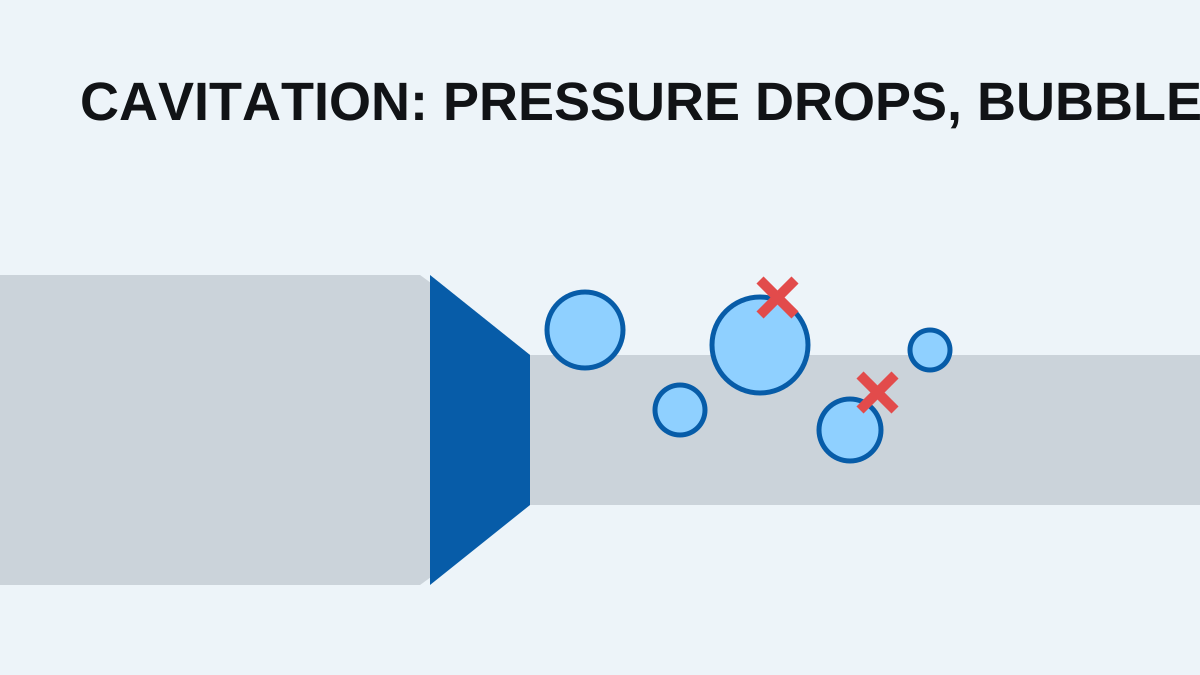
Cavitation occurs when local liquid pressure falls below the liquid’s vapor pressure, forming vapor bubbles, and then recovers above vapor pressure, causing those bubbles to collapse. The collapse can produce noise, vibration, pitting, trim damage, and damage to downstream piping.
Distinguish cavitation from flashing
In cavitation, downstream pressure recovers enough for the vapor bubbles to collapse. In flashing, downstream pressure remains below vapor pressure and the vapor persists. The mitigation strategy is different, so identify the actual pressure profile through the valve.
Start with the process conditions
Collect inlet pressure, outlet pressure, temperature, vapor pressure, flow rate, fluid properties, line size, valve geometry, and all operating cases. The worst cavitation case may occur at start-up, low downstream pressure, or a partially open valve rather than at design flow.
Reduce the pressure drop per stage
Multistage or tortuous-path trim divides one severe pressure drop into several smaller drops, keeping local pressure from falling as far below vapor pressure. Anti-cavitation trim can also direct jets away from vulnerable surfaces and manage recovery.
Change the system pressure profile
- Increase downstream pressure where the process allows
- Move the valve to a location with more static head
- Split the total pressure drop between devices
- Reduce fluid temperature to lower vapor pressure
- Use a valve style and size suited to the required pressure recovery
Avoid blindly oversizing the valve
An oversized valve may operate near its seat, creating high local velocities and poor control. Size the valve for the full operating envelope and review travel at minimum, normal, and maximum flow.
Verify mechanical consequences
Consider vibration, acoustic limits, material hardness, trim life, downstream straight run, and inspection access. Severe service should be reviewed with the valve manufacturer using current sizing software and application data.
Technical references
This article is general educational information. Apply project specifications, current manufacturer data, applicable codes, and qualified engineering judgement.