
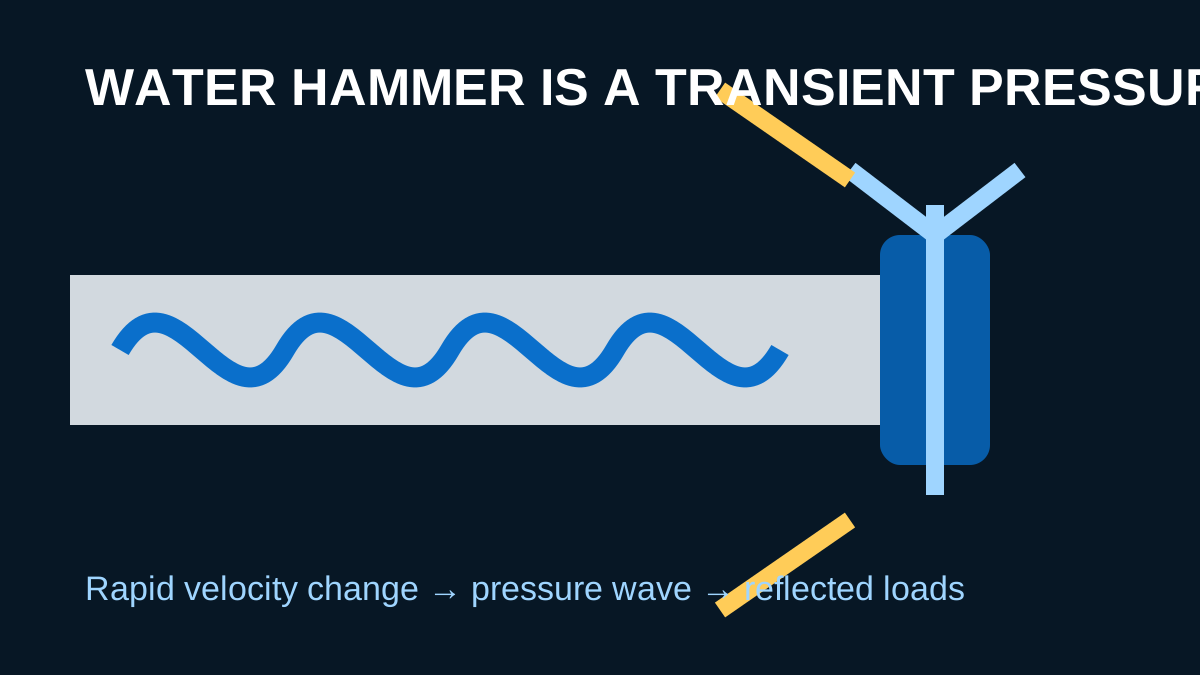
Water hammer is a transient pressure surge created when fluid velocity changes rapidly. A closing valve, pump trip, check-valve slam, rapid start, or collapsing steam pocket can launch a pressure wave through the piping system.
The Joukowsky relationship shows why fast velocity changes matter: pressure rise is related to fluid density, wave speed, and the change in velocity. Real systems require transient analysis because pipe elasticity, supports, branches, air pockets, valve closure profiles, and reflections change the result.
Common symptoms
- Banging or hammering sounds
- Pipe movement and support damage
- Leaking flanges or instrument connections
- Check-valve damage
- Unexpected pressure spikes and trips
- Repeated failures near elbows, valves, or dead legs
Typical causes
Rapid valve closure, sudden pump shutdown, poorly selected check valves, trapped air, abrupt control actions, long liquid lines, and steam condensate accumulation are common triggers.
How to reduce water hammer
- Control valve opening and closing time
- Use pump ramping or variable-speed control
- Select non-slam check valves where appropriate
- Install surge vessels, accumulators, relief devices, or air chambers
- Provide suitable pipe supports and anchors
- Remove condensate and provide proper steam-line drainage
- Perform transient modelling for critical systems
Instrumentation considerations
Pressure transmitters should be checked for surge exposure and overpressure limits. Fast sampling may reveal spikes that slower systems miss. Snubbers or dampening can protect an instrument but may also hide dynamic information, so use them deliberately.
Technical references
- Emerson Keystone check-valve manual discussing water hammer
- Emerson Yarway Industrial Steam Trapping Handbook
This article is general educational information. Apply project specifications, current manufacturer data, applicable codes, and qualified engineering judgement.